


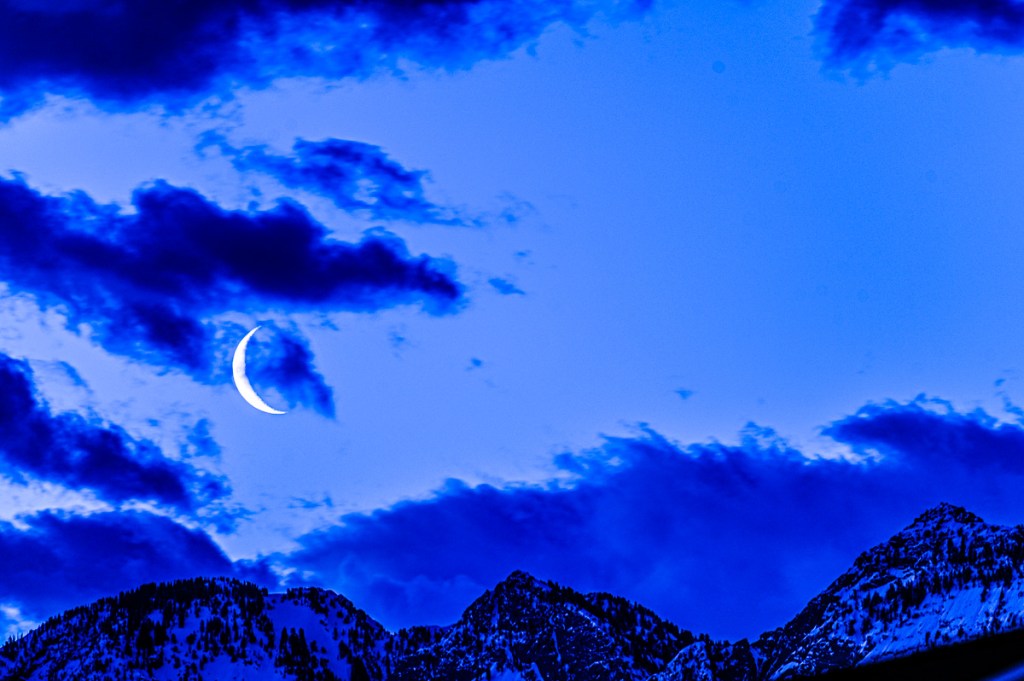
My spouse and I were privileged to observe the total solar eclipse of April 8, 2024. The story began three days earlier:

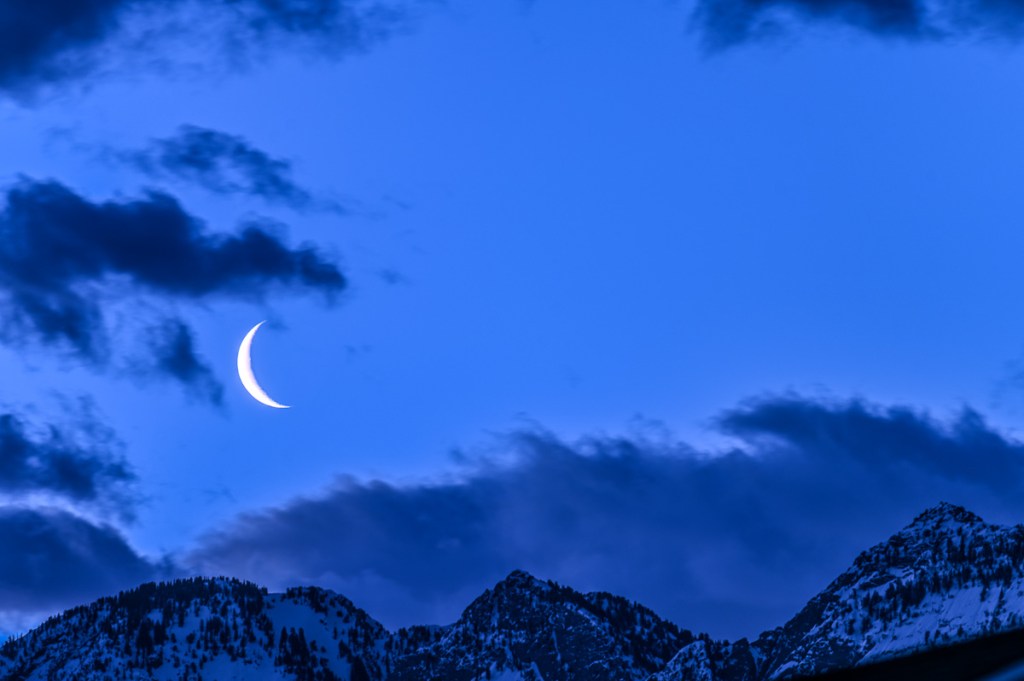
Old Moon 5 April 2024
Here is the Moon 80 hours before eclipsing the Sun. This is a “super” waning crescent Moon because it occurred at perigee.1The closest Earth-Moon distance. The opposite of perigee is apogee, the farthest Earth-Moon distance. The Moon appears about 11% closer and 30 percent brighter at perigee than at apogee. Perigee and apogee occur once during each lunar cycle. And that one time can come at any lunar phase. By convention the Moon is at perigee or apogee within a few days either side of precise perigee or apogee.
Because the Moon gets super close once every month, one lunar phase or another gets a super turn every month.
Several years ago I became aware of my ability to recognize changes in the Moon’s apparent diameter by glancing at it. I did not intentionally cultivate this superpower. (If you follow this blog, please don’t cancel.)
In the above photo the Moon has barely risen above the crest of the Wasatch Mountains in Millcreek, Utah. Mt. Olympus, far right and Triangle Peak, center.
As I experienced this moonrise, I reflected that in three days I would be in Uvalde, Texas on the centerline of the upcoming total eclipse. Fours years ago I had signed my spouse and me up with Twilight Tours to manage the details of the trip. BTW I recommend that company highly.


Eclipse Day in Uvalde, Texas
Three days after the above photo. The author, Susan Jarvis, and Seth Jarvis (left to right). You may remember Susan and Seth from my post on the annular eclipse of the Sun last October. You can see that post here. Photo courtesy of Carol DeCaria


Uvalde, Texas 1:06 p.m. CDT
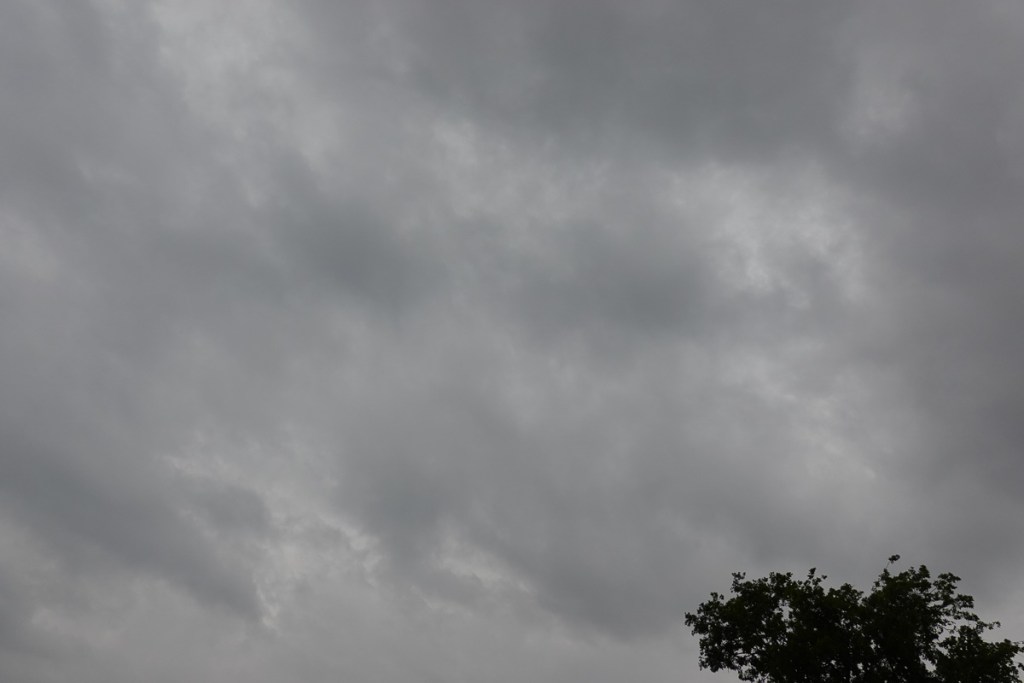
Twenty-three minutes before the beginning of totality. Yes, the unthinkable has happened: Not one but two cloud decks have eclipsed the eclipse. By consulting an app, I knew that 70 percent of the Sun was now covered with the resulting slate gray sky and dull green grass.
Tree of birds 1:06 p.m. CDT
This tree was host to a flock of blackbirds. They did not fly out of the tree long enough to identify visually, but my best guess by their behavior was common grackles (Quiscalus quiscula). The birds became silent just before totality and had not stirred even 45 minutes after totality ended.

Cat 11:07 a.m. CDT
This cat, probably feral, has decided to sit out the midday darkening.
Uvalde County Sheriff’s Office 1:09 p.m. CDT
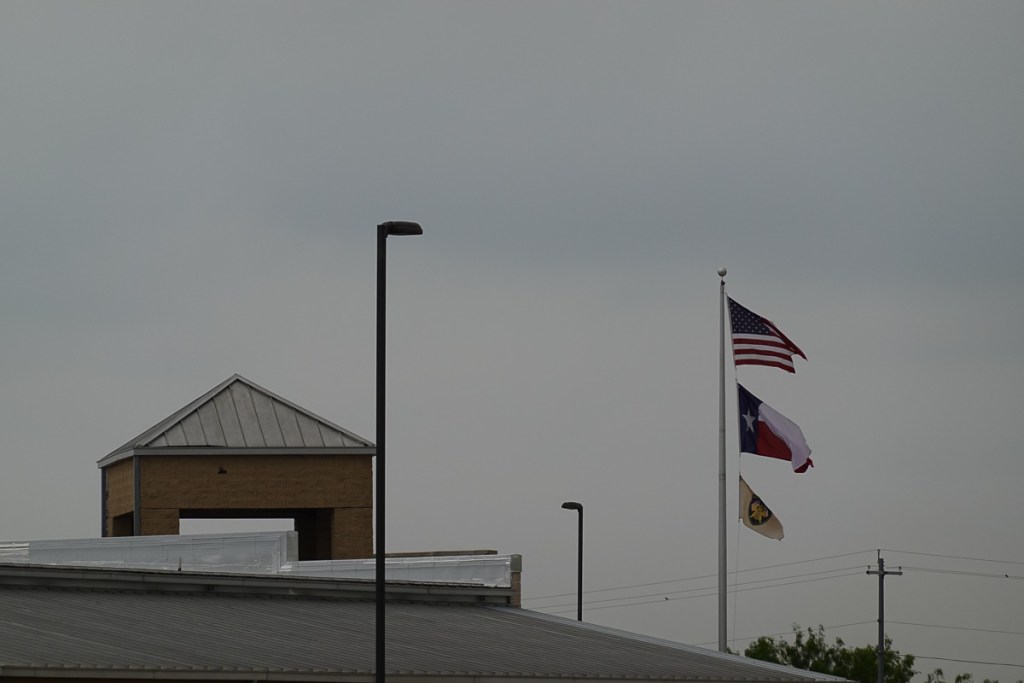
Although we cannot see the sun itself, we know the Moon is concealing 74 percent of the solar surface.

Uvalde County Fairplex 1:11 p.m. CDT
Twilight Tours had rented this complex exclusively for us 400 eclipse watchers. The Sun is now 77 percent covered.
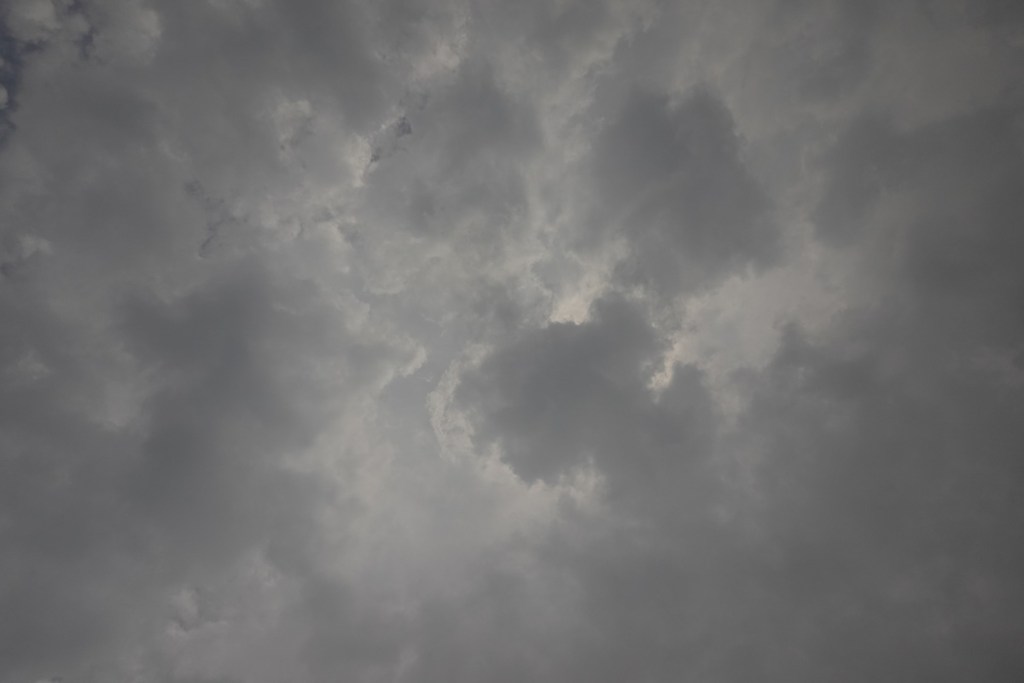
Clouds Eclipsing the Eclipse 1:27 p.m. CDT
Two minutes before the beginning of totality. The three-percent solar crescent played peek-a-boo through momentary slits in the clouds. Because the peek-a-boos lasted only seconds, I have no photos of them. The wonderful glimpses, however, remain in my memory.
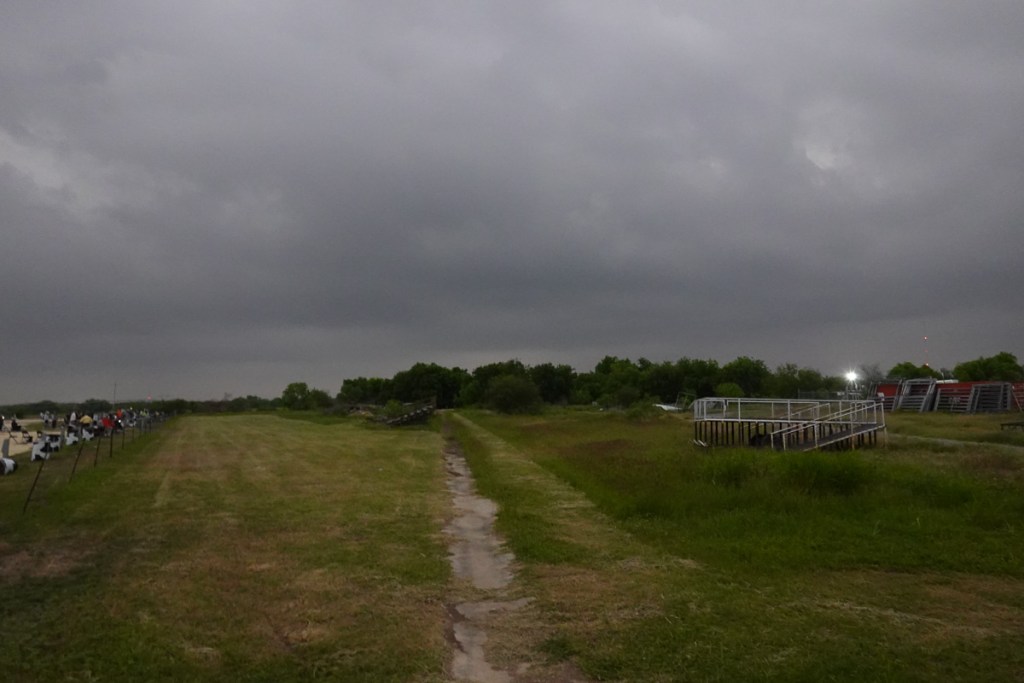
A Field South of the Fairplex 1:29 p.m. CDT
Only 0.4 percent of the Sun’s disc is left exposed. Totality is seconds away.
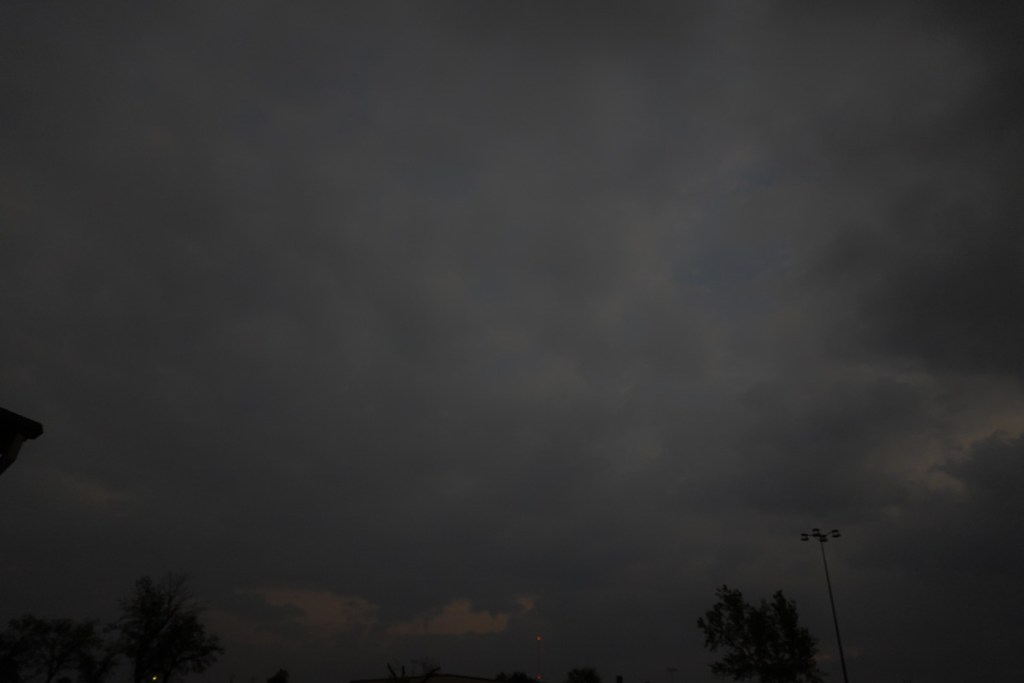
Totality 1:29 p.m. CDT
Only 30 seconds have elapsed since the above photograph.
I was not emotionally prepared for the sudden and overwhelming darkness.
The two pinkish patches at the bottom are peepholes into the edge of totality, about 55 miles (89 kilometers) distant.
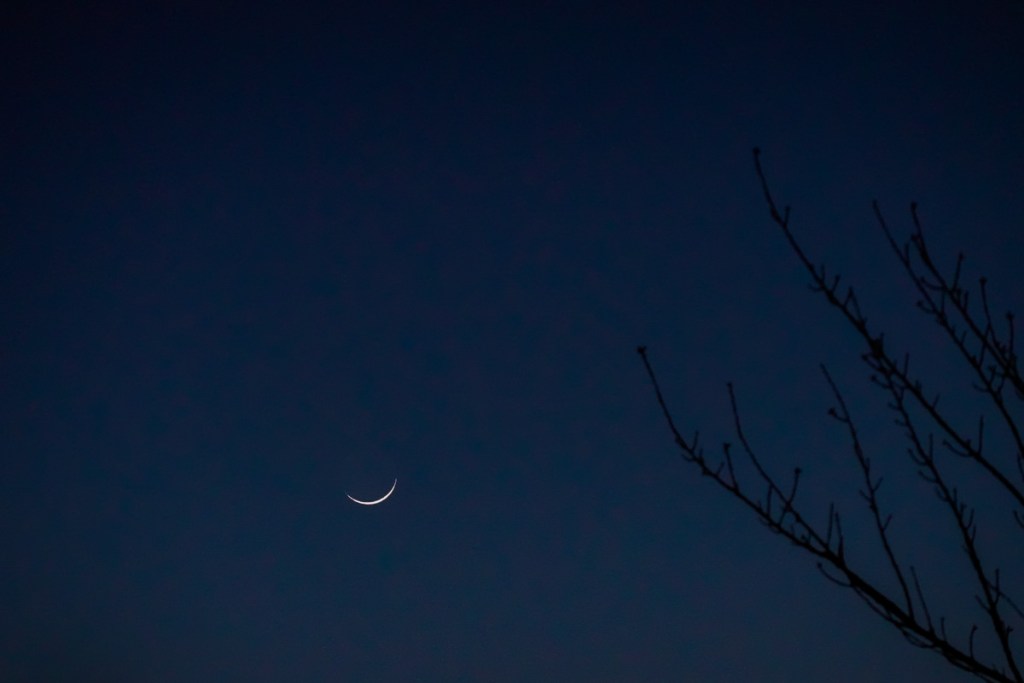
New Moon setting over Salt Lake City 7:30 p.m. MDT
Back home. This Moon is 31 hours after the eclipse.
Afterthoughts
Other than the few momentary views of the nearly eclipsed Sun, our group never saw the Sun itself.
The sudden and profound darkness of totality left me without words.
Thank you for visiting Thecosmos.blog,
Your host,
Michael DeCaria
- 1The closest Earth-Moon distance. The opposite of perigee is apogee, the farthest Earth-Moon distance. The Moon appears about 11% closer and 30 percent brighter at perigee than at apogee. Perigee and apogee occur once during each lunar cycle. And that one time can come at any lunar phase. By convention the Moon is at perigee or apogee within a few days either side of precise perigee or apogee. ↩︎