


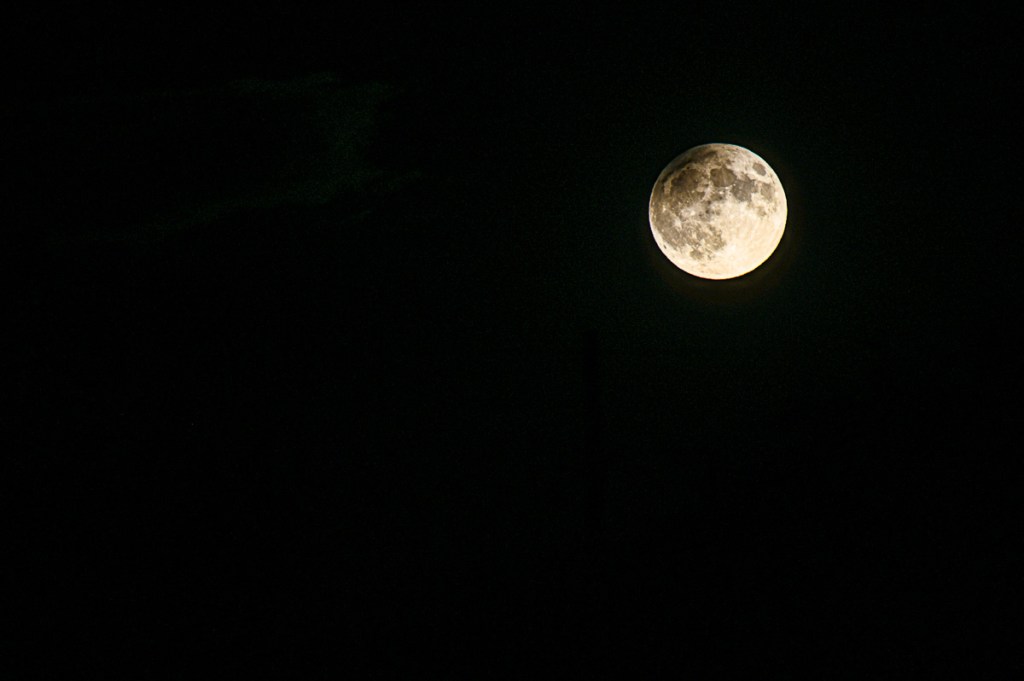
On September 17, 2024, the Earth passed almost exactly between the Sun and the Moon.
The “almost” resulted in a partial rather than a total eclipse.
Here is what I saw:
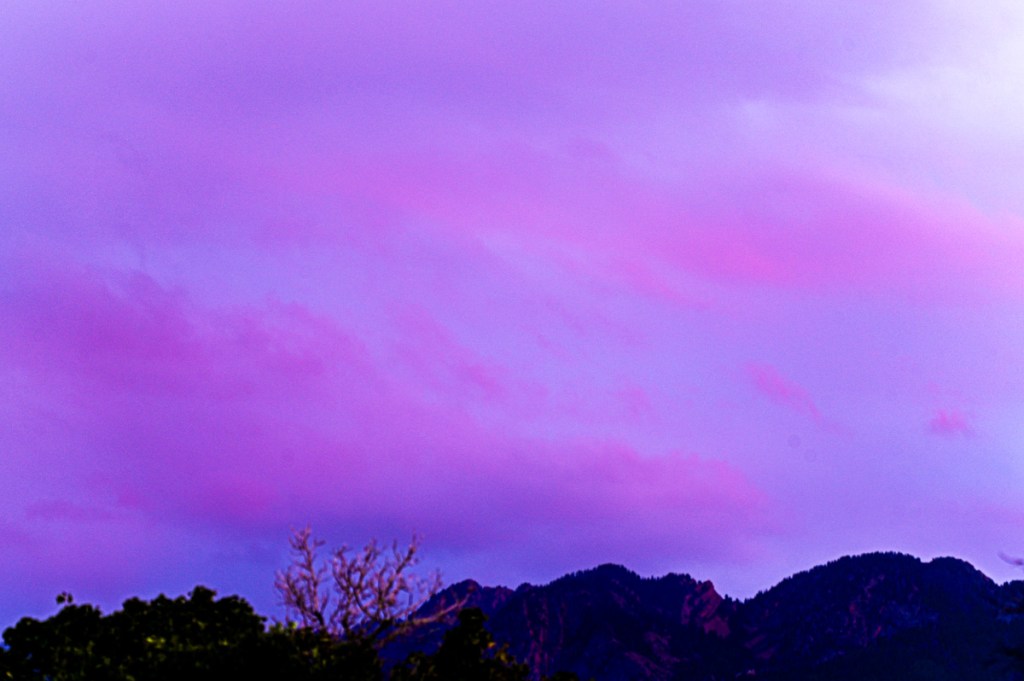
Wasatch Mountain Crest Where the Moon Will Soon Rise
These cotton candy clouds, illuminated by the setting Sun at my back, provided the opening act.
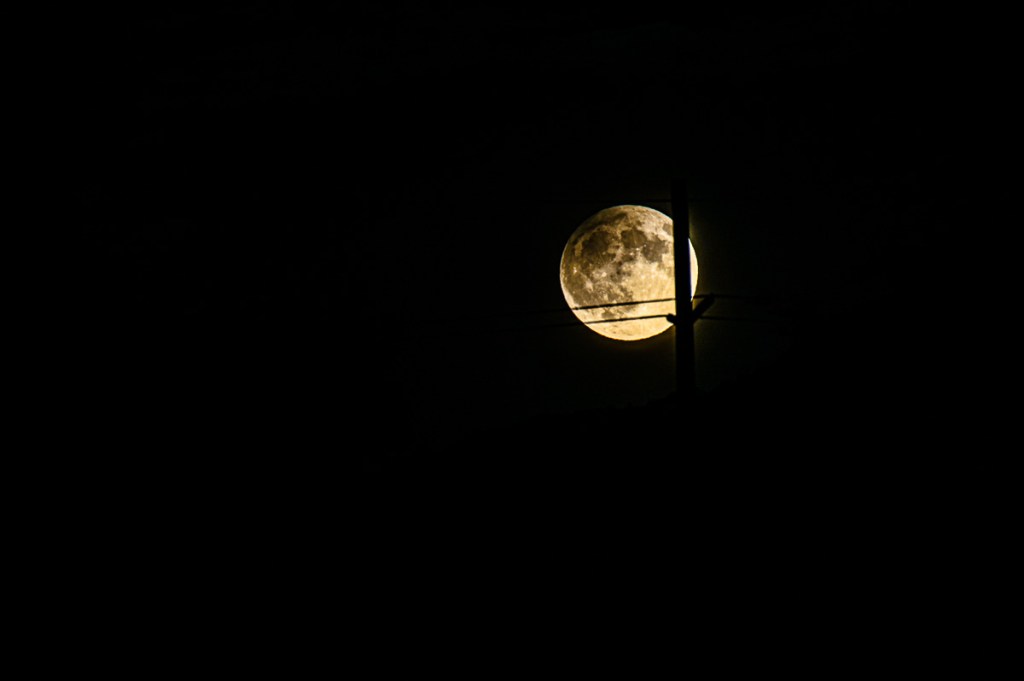
Partially Eclipsed Moon
The Earth’s shadow has a dark central part called the umbra.
A lighter part of the shadow called the penumbra surrounds the umbra.
Only the north portion of the Moon entered the umbra during this eclipse while the penumbra bathed the rest of the Moon.
If you imagine the Moon as a clock, its north pole was at 10:00 o’clock.
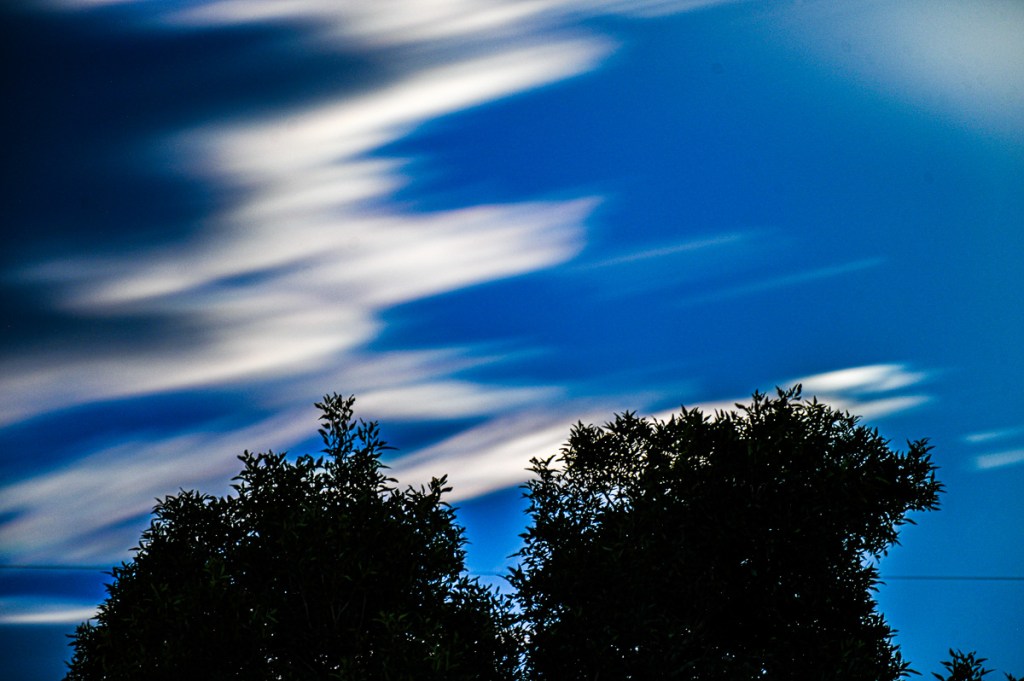
Time-lapse during the Eclipse
A 30-second exposure1Other details: Nikon Z6, 500 ml lens, f5.6, ISO 100 allowed the camera to record the moving cirrus clouds and changed the sky from black to blue.
The glow from the off-frame eclipsed Moon intruded into the upper right corner.
Endnotes
- To the uninitiated partial lunar eclipses may not be exciting.
- But regular Moon watchers find them spectacular.
- Something to think about is that the Earth is always casting a shadow into space.
- But the Moon encounters the shadow only occasionally and then only at full phase.
As always I thank you for visiting thecosmos.blog.
Your host,
Michael DeCaria
- 1Other details: Nikon Z6, 500 ml lens, f5.6, ISO 100