Carol and I were on a vacation in southeastern Virginia during the first week of October 2024.
On the second day we were sightseeing along the National Colonial Historic Parkway near Jamestown.
I could not resist this pullout that typified the Eastern Deciduous Forest, the ecosystem that covers the eastern third of the continental US.
Here are four photographs from that afternoon:

A Stand of Yellow Buckeye (Aesculus flava)
The James River in the background.
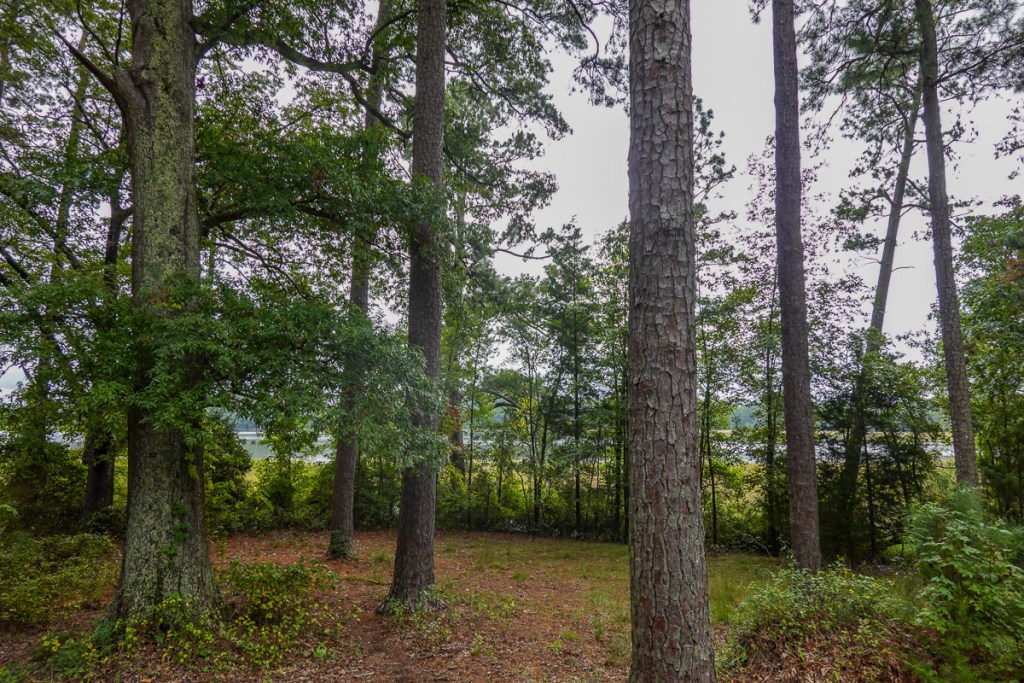
Forest Floor under the Yellow Buckeyes (A. flava)
Again, the James River in the background.
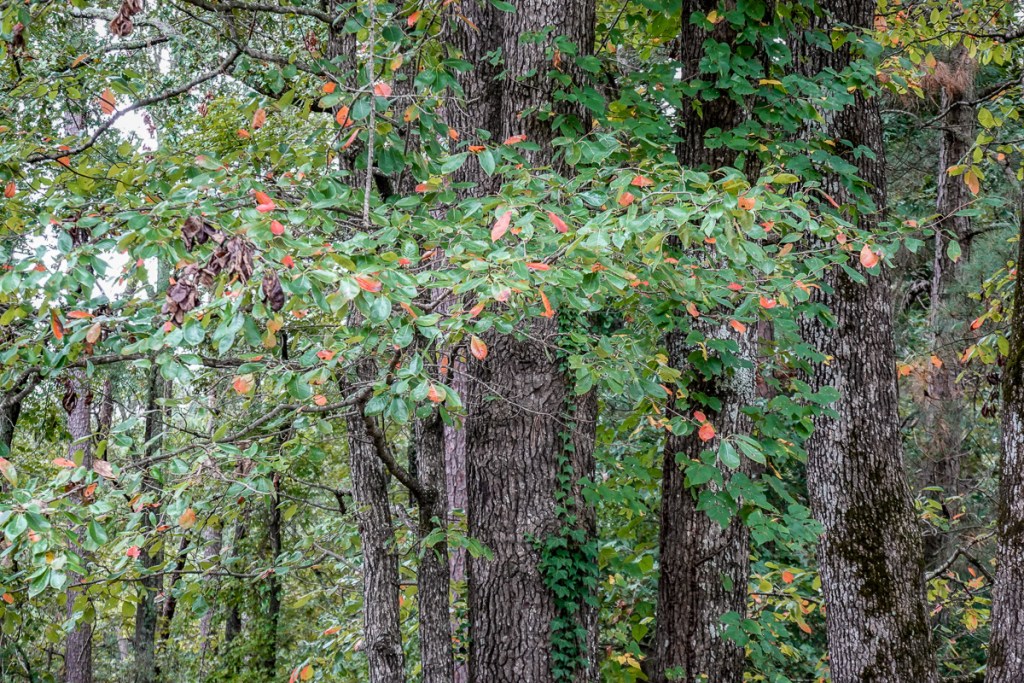
Common Hoptree (Ptelia trifoliata)
The hoptree, a shrubby tree, grows in the understory of the yellow buckeyes.
The light shimmering off the hoptree leaves contrasted with the overcast day and dark forest.
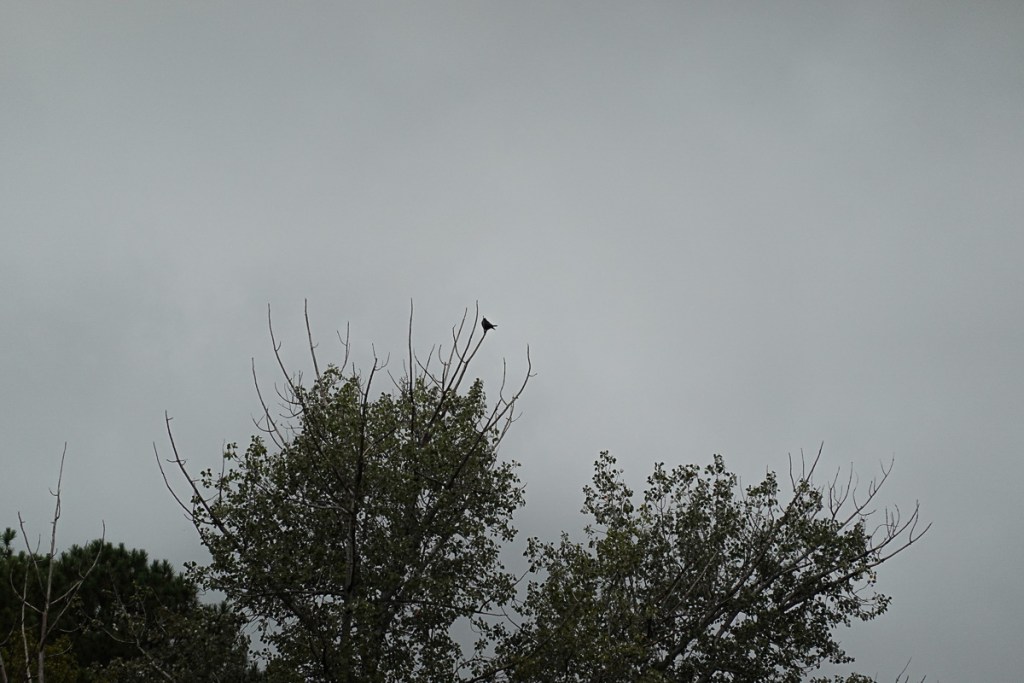
American Robin (Turdus migratorius)
The robin was curious about Carol and me because no one else was on the Parkway.
Endnote
I have lived in wildland urban interfaces (WUIs) of the Eastern Deciduous Forest in Maryland, New Jersey, and Mississippi.
And I have visited, often by hiking, the forest in the other 20 states it covers.
It is always the same, it is always different.
Thank you very much for visiting Thecosmos.blog.
Your host,
Michael DeCaria
“Make visible what, without you, might perhaps never have been seen.” -Robert Bresson

I enjoyed your intimate views of the forest. I felt as if there was a story attached like; “Why were these travelers visiting? What was the robin thinking? and was the river close enough to be heard?” Photographs transport me to both real and imaginary destinations.My curiosity was piqued. I wanted to see more…
Hi Susie, Your comments have hugely increased my appreciation of this scene. I knew the place was special when Carol and I stopped to take pictures. But thanks to you I appreciate the scene in new ways. With much gratitude, Michael
I find the bark on the Buckeyes to be what catches my eye and sparks my imagination. It reminds me of drying and baking mud in the hot summer sun. I have never noticed that before.
I love that you can travel and see so many things and yet curate this posting to just 4 pictures and have them represent so much.
TY for taking your time to share this with us so we can be inspired too.
Hi Darrin, I, too, was drawn to the bark of the buckwood trees. Your connecting the bark to the activity of drying mud in the summer sun is perfect! I have since learned that yellow buckeyes are native to the Appalachian Mountains and occurs only little outside the mountain range. I have also learned that the State Arboretum of Utah (https://facilities.utah.edu/tree-tour/ has one specimen on the University of Utah campus. Thank you very much for your intriguing comments. Michael
Very nice. And a needed visual lift as we anticipate spring.
Hi Alex, It was fun that only last fall when you visiting from Pennsylvania we compared eastern and western forests. I relish their differences. Thank you, Michael