Hello Readers,
For a while I have had the idea of taking photos of the Moon throughout a calendar month.
I chose May 2026 because it was a bookend month beginning and ending with full Moons.
Every image was captured within 100 meters of my house.
From the couple hundred photos, I chose ten for the final gallery.
Two of the photos did not contain the Moon, but I included them because I liked them.
Here are the photos in chronological order:
May 1, 2026
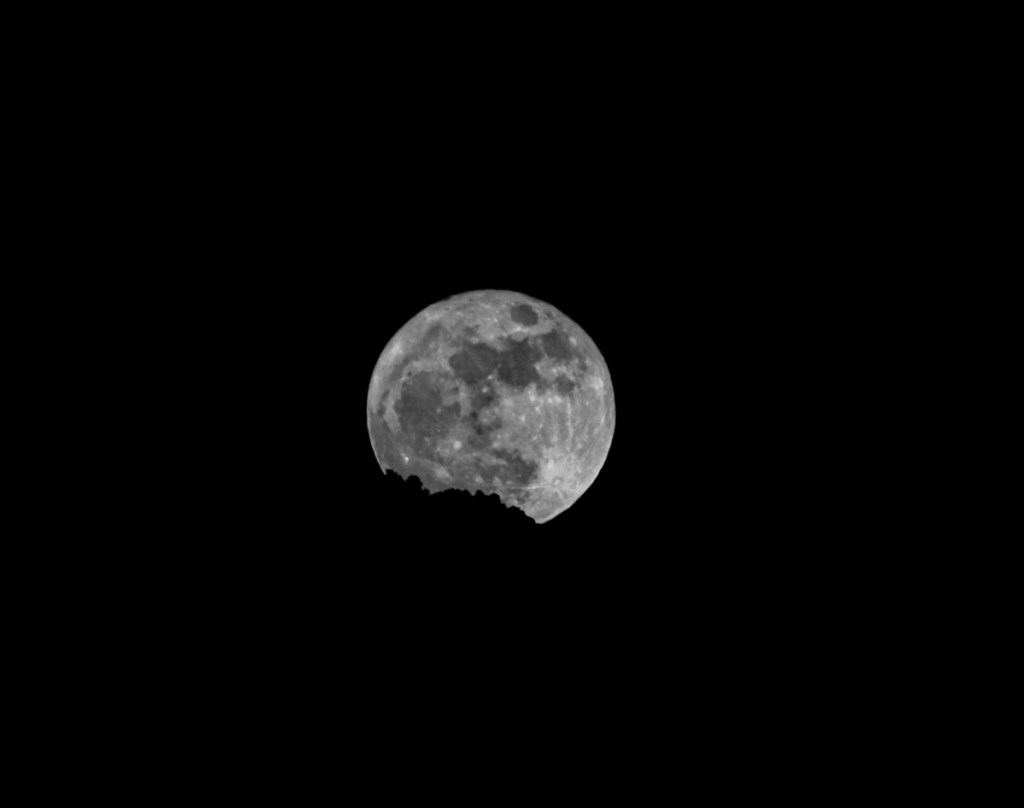 First Full Moon of May
The Moon had almost cleared the shoulder of Mount Olympus.
May 4, 2026
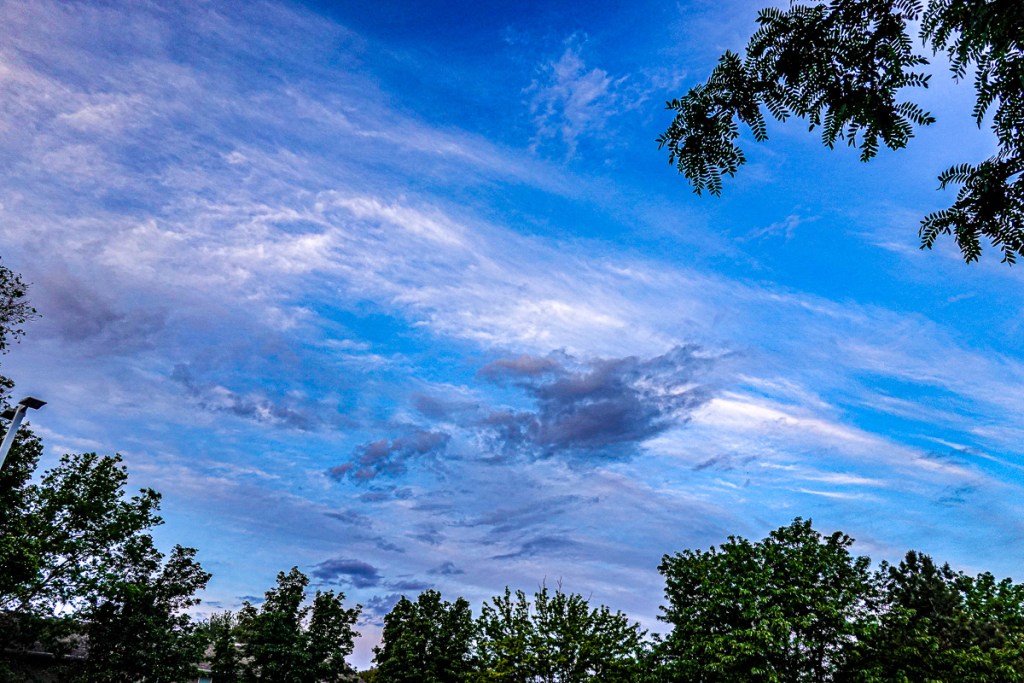
Early Morning Eastern Sky
No Moon in this scene.
Clouds had obscured the setting Moon three days past full, but as a consolation I found this multilayered sky.
May 6, 2026
 Waning Moon an Hour before Setting
Darrin C. and I were visiting on my deck in the afternoon when I told him about this Moon project.
Just then he looked to the west behind me and announced he could see the Moon.
I grabbed my camera and got the shot.
The daytime Moon in its larger phases reminds me of a balloon.
May 9, 2026
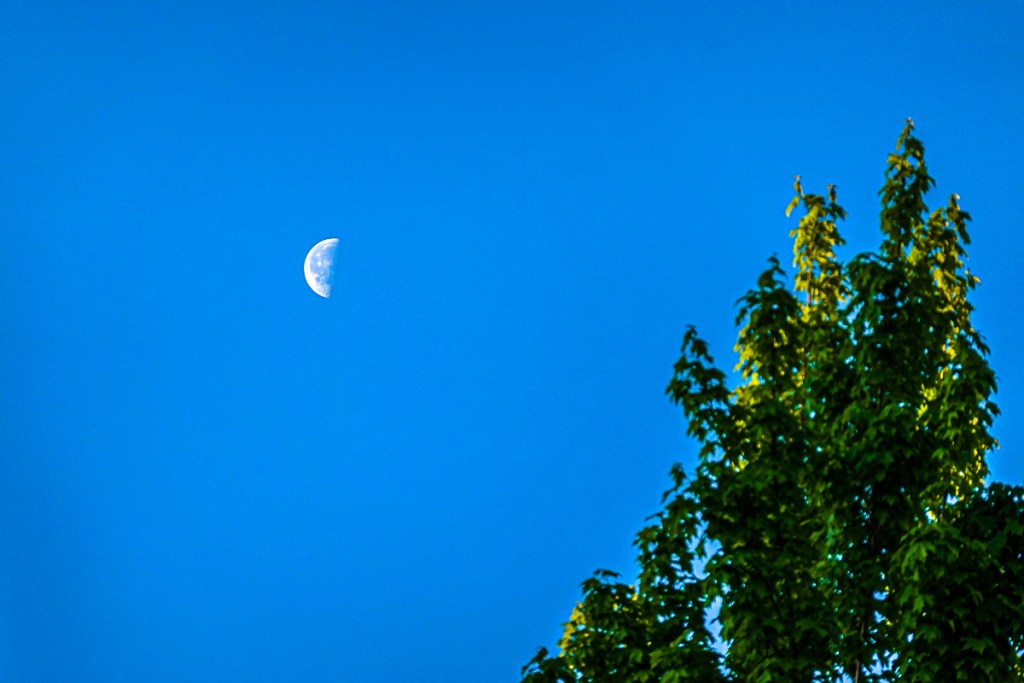 Last Quarter Moon at Sunrise
At sunrise the last quarter Moon always lies on the meridian.1The meridian is the imaginary line that passes directly overhead between the north and the south points of the horizon.
May 13, 2026
 Sunset
No Moon in this photo.
I was on my front porch and looking for Venus, but this sunset presented itself.
Although the Great Salt Lake and the West Desert are not visible from my house, the sky above them is.
And that sky routinely delivers awesome sunsets literally to my front door.
May 14, 2026
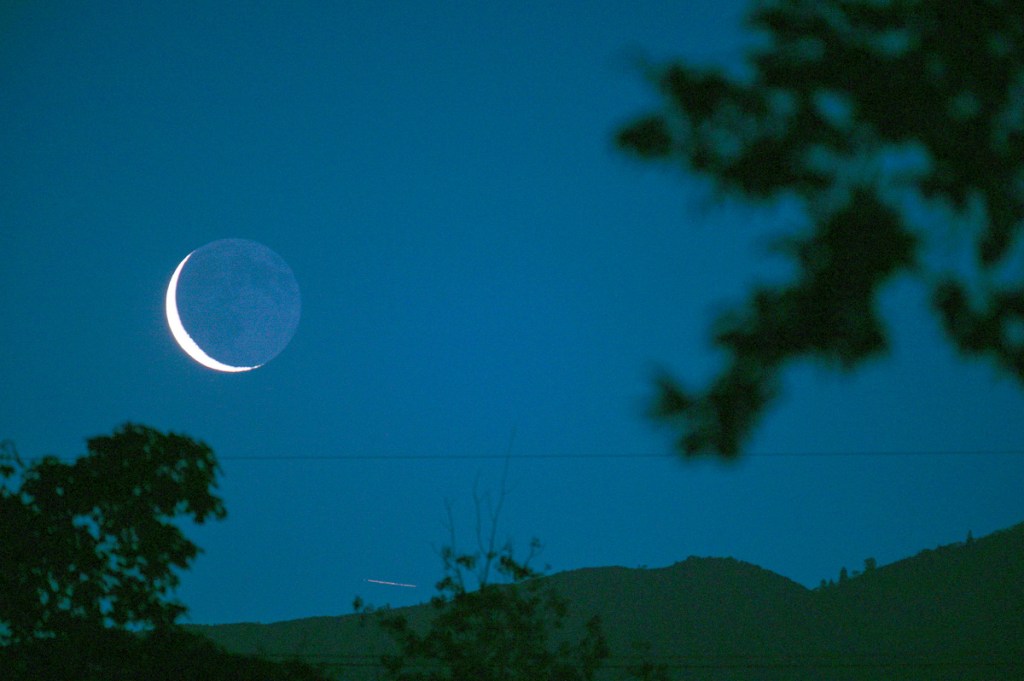 Old Moon 57 hours before the new Moon.
I captured this image an hour before sunrise when the sky was black and only the Moon was visible to the unaided eye.
Postprocessing brought out the remainder of the scene to simulate dawn.2A small airplane made the streak. A Nisi night light filter enhanced the blue of the predawn sky.
At the moment of the new Moon, our natural satellite aligns barely north or south of the Sun, and the Moon is invisible because only its dark side faces us.
As a practical matter the new Moon is invisible for three days: counting the day of, the day before and the day after.
An observer on the Moon and looking at Earth when I took this photo would have seen a full Earth.
The Earth seen from the Moon goes through phases like the Moon’s phases, except as the Moon waxes, the Earth wanes and vice versa.
In this photo direct sunlight illuminated the crescent,
and indirect sunlight bounced off Earth illuminated the remainder of the lunar disc.
May 18, 2026
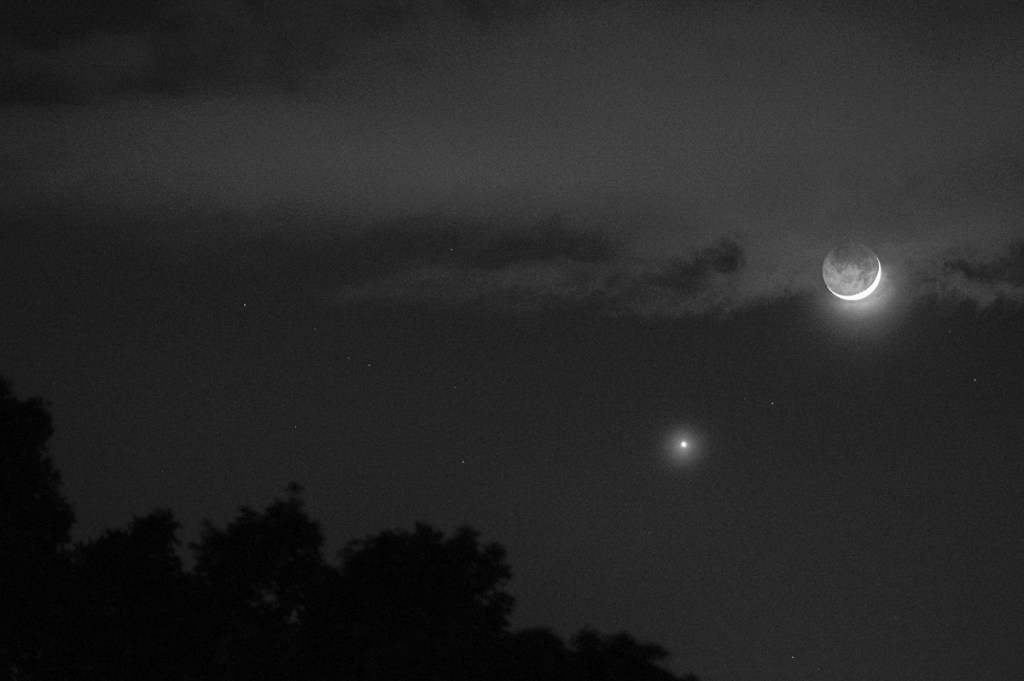 Fifty-five-hour Crescent after the New Moon.
This photo was taken about the same number of hours after the new Moon as the previous was before the new Moon.
Earthshine is prominent as in the previous photo.
Brilliant Venus is within two degrees of the Moon.
The thin clouds and haze add a pleasing effect to this photo processed in black and white.
May 23, 2026
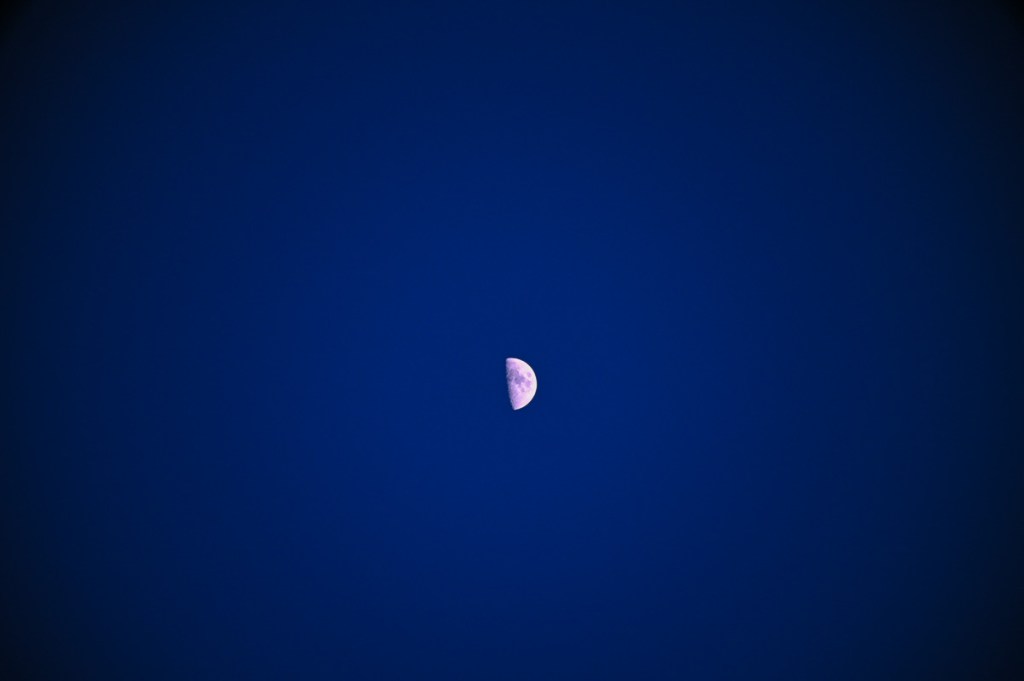 First Quarter Moon Due South at Sunset
The first quarter Moon lies on the meridian at sunset.
The geometry of the Earth, Moon, and Sun is the reciprocal of the last quarter Moon.
May 30, 2026
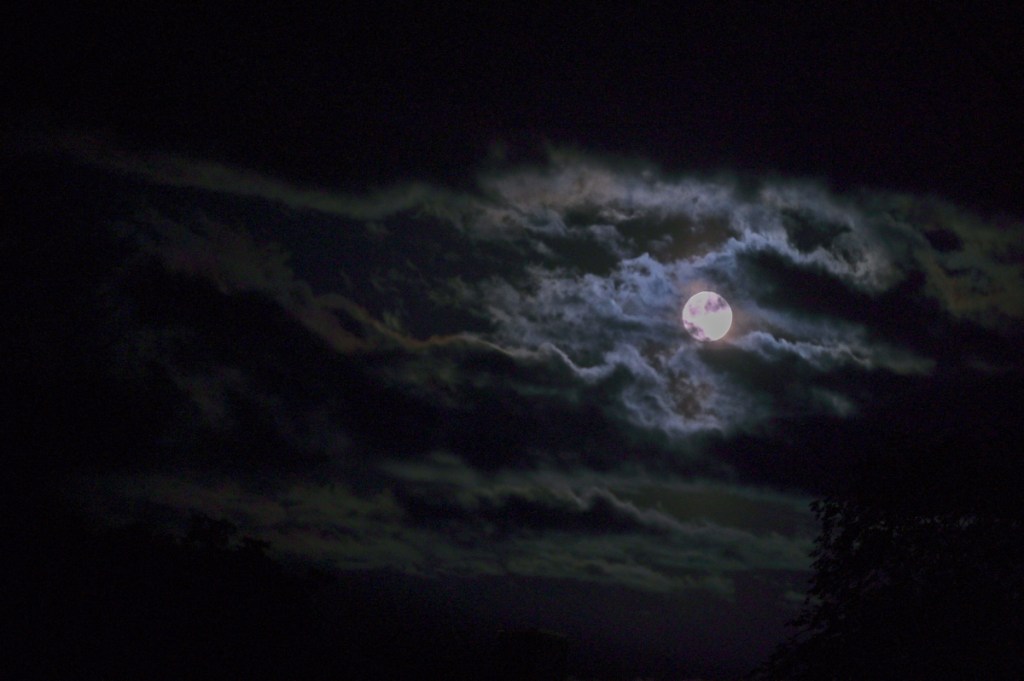 Second Full Moon of May
Folklorists tell us the second full Moon of a month is called a blue moon.
As in the expression, “Once in a blue moon.”
I walked a half mile in the dark as I looked for a proper place to take photos of the rising Moon.
Well, this was the last photo of the shoot, and I captured it from where I had started, my driveway.
Thank you, readers, for coming along with me in this exploration of the “Moons of May.”
Your host,
Michael DeCaria
Thecosmos.blog
“Make visible what, without you, might perhaps never have been seen.” -Robert Bresson
About the featured photo: The blue Moon has just risen over Sunrise Peak. Twin Peaks is on the right. The star, Antares has just risen on the left shoulder of Dromedary Peak. The three peaks average 3429 meters (11,250 feet) above sea level. (Note: the featured photo appears only on the blog or the WP reader.)

Thanks Mike! I’ve been looking forward to the post going live ever since you told me about it. It didn’t disappoint.
Hi Alex, Thank you for your kind comment. Best regards, Michael
This has been my favorite post of yours on your blog! I think it’s because I thoroughly understand the phases of the moon (and earth) and also because your images were local – right here in my own neighborhood!
Your opening image of the full moon cresting Mt. Olympus is simply stunning! So clear. I went back to look for Antares in the title photo – and sure enough – there it is! I didn’t know the name of the mt. peak is Dromedary. I Learned something new.
The hazy view of the crescent moon with Venus is mystical and emotional. Your image of the second full moon (blue moon) looks to be straight out of a Dracula movie. All it needs is some eerie music from a theremin.
Who knew that documenting the moon phases for the month of May would present such a variety of fascinating images?
Hi Susie, Thank you for so obviously connecting with this post. You always find facets that I had not even thought of. As I took the photos, I sometimes doubted that images of the Moon’s phases throughout a month would work. I guess the lesson is don’t underestimate the beauty of nature, in this case, the Moon. Best regards, Michael